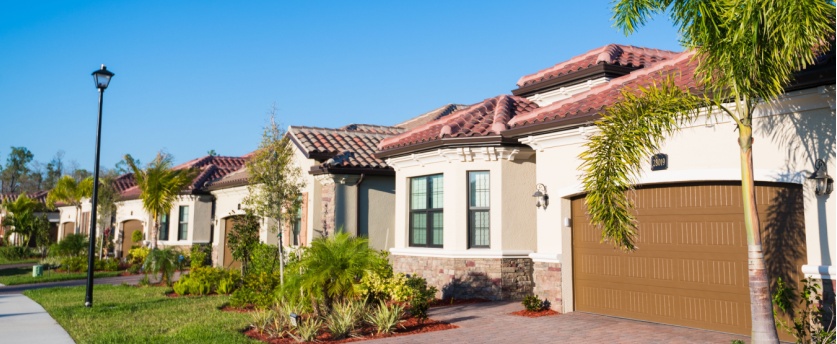
You can finance a duplex, triplex or fourplex in Florida with a residential mortgage, and the first question is whether you will live in one of the units. If you will, owner-occupied FHA, VA and conventional programs can apply to a property of up to four units. If you will not, the property is financed as an investment property, with a larger down payment, or with a DSCR loan qualified on the rent it brings in.
This guide explains how FHA, VA and conventional programs treat a 2 to 4 unit property, how rent from the other units can count, and what to plan for in Florida. Program rules come from the agencies that set them, named and dated below. Rates, fees and approval depend on your file and the lender, so Louis Doherty compares options across more than 150 lenders for your scenario rather than quoting them here.
What Counts as a 2 to 4 Unit Property?
A 2 to 4 unit property is one residential property with two, three or four separate living units: a duplex, a triplex or a fourplex. Residential mortgage rules stop at four units. FHA's regulations cover "one- to four-family" dwellings (24 CFR Part 203, Subpart A, eCFR current as of November 10, 2026), Fannie Mae sets its conventional limits by number of units from one to four (Fannie Mae Eligibility Matrix, August 5, 2026), and VA says a VA-backed purchase loan can buy "a single-family home, up to 4 units" (VA.gov, Purchase loan, last updated January 7, 2026). A unit in a condominium building is financed under condo rules instead; see our guide to condo financing in Florida.
If You Will Live in One of the Units
Living in one unit is what opens the owner-occupied programs, and FHA, VA and Fannie Mae set different rules for the property and for renting the other units.
FHA
FHA insures mortgages on one- to four-family dwellings occupied by the borrower as a principal residence, which FHA defines as the home where you maintain your permanent place of abode and typically spend the majority of the calendar year (24 CFR 203.18(f)(1)). On a two-, three- or four-family dwelling, FHA also bars renting any unit "for transient or hotel purposes" while the FHA-insured mortgage is in place, which FHA defines as a rental for any period less than 30 days or a rental with customary hotel services (24 CFR 203.16 and 203.42(c), eCFR current as of November 10, 2026). If your plan for the other units is short-term vacation rental, FHA is not the program for it. FHA loan limits also rise with the number of units; see our 2026 Florida loan limits guide and HUD's limit lookup linked there.
VA
For eligible veterans, service members and qualifying surviving spouses, a VA-backed purchase loan can buy a home of up to 4 units, and you must live in the home you are buying (VA.gov, Purchase loan, last updated January 7, 2026). If you are working with remaining entitlement rather than full entitlement, VA tells you to use the county's one-unit conforming limit "even if your property has more than one unit" when you work out your remaining entitlement (VA.gov, VA home loan entitlement and limits, last updated August 12, 2025). See VA loans in Florida for eligibility questions.
Conventional
Fannie Mae's Eligibility Matrix, dated August 5, 2026, sets the maximum loan-to-value for a 2 to 4 unit principal residence purchase at 95% for standard loan amounts underwritten through Desktop Underwriter, which means a down payment from 5% where the file qualifies. For high-balance loan amounts the maximum is lower: 85% for two units and 75% for three or four units (Fannie Mae Eligibility Matrix, August 5, 2026). The matrix notes there may be exceptions for certain transactions, and lenders can add their own requirements. The conforming loan limit rises with the number of units; the 2026 limits for Florida's 67 counties by unit count are in our 2026 Florida loan limits guide.
How Rent From the Other Units Can Count
For a conventional loan, Fannie Mae lets the lender count rental income from the subject property on a two- to four-unit principal residence (Fannie Mae Selling Guide B3-3.8-02, Rental Income from the Subject Property, dated September 2, 2026). On a purchase, the rent is supported by the appraiser's Small Residential Income Property Appraisal Report (Form 1025) and, where a lease is being transferred to you, the signed lease. Fannie Mae's calculation starts with 75% of the monthly gross rent. Rent from the unit you live in does not count (Fannie Mae Selling Guide B3-3.1-08, Rental Income). FHA and VA have their own rental income rules, and Louis reviews them against the current handbooks for your file.
Hypothetical example, for illustration only. This is not a quote, a rate or an approval. A buyer agrees to purchase a duplex for $600,000, will live in one unit and rent the other, and the appraiser's rent schedule supports $2,000 a month for the rented unit.
- Down payment under the conventional matrix: at the 95% maximum loan-to-value for a standard 2 to 4 unit principal residence purchase, the loan could be up to $570,000 ($600,000 × 0.95), so the down payment would start at $30,000, if the file qualifies.
- Rental income starting point: 75% of $2,000 is $1,500 a month. How the lender then applies that amount, alongside the full housing payment and your own income and debts, is part of the lender's full review.
Your own figures depend on the property, the appraisal, your credit and income, and the lender, which is why Louis runs your actual scenario.
If You Will Not Live There: Investment Financing
Without owner occupancy, a 2 to 4 unit property is an investment property. For a conventional purchase, Fannie Mae's Eligibility Matrix sets the maximum loan-to-value for a 2 to 4 unit investment property at 75% under Desktop Underwriter, so the down payment starts at 25% (Fannie Mae Eligibility Matrix, August 5, 2026). Investors who would rather qualify on the property's rent than on personal income often compare a DSCR loan, whose terms are set by the lender. See investment property loans for the other routes.
What to Plan For in Florida
- Your rental plan. Decide early whether the other units will be long-term or short-term rentals. Under an FHA-insured mortgage, rentals of less than 30 days are not allowed on a two- to four-family dwelling.
- Insurance for the whole building. Get homeowners or dwelling insurance quotes for the full property before you go under contract, since the payment you qualify on includes insurance.
- Loan limits by county and unit count. Conforming and FHA limits differ by county and by number of units, so check the figure for the property's county and unit count.
- Condo or not. A building split into condo units follows condo rules, not 2 to 4 unit rules.
Questions About Financing a 2 to 4 Unit Property
Can I buy a fourplex with an FHA loan if I live in one unit?
FHA's rules cover one- to four-family dwellings that the borrower occupies as a principal residence, so a fourplex can qualify when you live in one unit and the property and your file meet FHA's requirements. Louis confirms the property, the rental income treatment and the current loan limit for your county.
Can I use a VA loan to buy a duplex?
Yes. VA says a VA-backed purchase loan can buy a home of up to 4 units, and you must live in the home you buy. You also need a Certificate of Eligibility and must meet VA's and the lender's credit and income standards.
Does rent from the other units help me qualify?
It can. On a conventional loan, Fannie Mae lets the lender count rent from the other units of a two- to four-unit home you live in, starting from 75% of the monthly gross rent and supported by the appraiser's rent schedule or leases. FHA and VA apply their own rules, which Louis reviews for your file.
Can I rent the other units as short-term rentals with an FHA loan?
No. FHA's regulations bar renting any unit of an FHA-insured two-, three- or four-family dwelling for less than 30 days or with customary hotel services. A conventional loan or investment financing may fit a short-term rental plan better.
The Bottom Line
A 2 to 4 unit property can be a home and a rental in one purchase. Whether you will live there decides which programs are open, and the three programs set different rules for down payment, loan limits and rental income. Bring Louis the property, your plans for the other units and your income picture, and he will compare the routes that fit.
Weighing a Duplex, Triplex or Fourplex?
Get a review of FHA, VA, conventional and investor options for the property you have in mind.
Prefer to talk it through? Call Louis Doherty at (954) 394-1959 to go over the property and your plans for the other units.